
Six AM in Durban: Nortje, the Red-Ball Ledger, and South Africa's Unfinished Pace Project
**মূল উত্তর:** আনরিখ নর্টজে ২০২৩ সালের পর প্রথম টেস্টে ফেরার জন্য প্রস্তুত, কারণ তিনি দক্ষিণ আফ্রিকার ১৮ জনের প্রাথমিক দলে আছেন এবং অস্ট্রেলিয়ার বিরুদ্ধে তিন ম্যাচের ওয়ার্ল্ড টেস্ট চ্যাম্পিয়নশিপ সিরিজে লাল বলের লোড Averageে তুলছেন। **মূল তথ্য:** - আনরিখ নর্টজে ১৯টি টেস্টে ৭০টি উইকেট নিয়েছেন, যা ম্যাচপ্রতি প্রায় ৩.৬৮ উইকেট। - সিরিজটি অস্ট্রেলিয়ার বিরুদ্ধে তিন ম্যাচের WTC সিরিজ, শুরু কিংসমিড, ডারবানে। - নর্টজে ২০২৩ সালের পর কোনো টেস্ট খেলেননি, তাই বর্তমান লাল বলের Form-ডেটা নেই। - তিনি ১৮ জনের প্রাথমিক দলে আছেন; চূড়ান্ত একাদশ এখনো ঘোষণা হয়নি। - তাঁর Bowling অ্যাভারেজ, Economy ও স্ট্রাইক রেট আইসিসির এই খবরে উল্লেখ করা হয়নি। **সূত্র:** আইসিসি অফিসিয়াল চ্যানেল, নয় অক্টোবরের সিরিজ শুরুর আগে প্রকাশিত | Cross-checked: cricsultan.com **সম্পর্কিত প্রশ্নোত্তর:** প্রশ্ন: আনরিখ নর্টজে কবে শেষ টেস্ট খেলেছিলেন? উত্তর: তিনি ২০২৩ সালের পর কোনো টেস্ট খেলেননি, এবং ২০২৫ সালের অক্টোবরে ফেরার প্রস্তুতি নিচ্ছেন। প্রশ্ন: নর্টজে কি টেস্টে ফেরার জন্য নিশ্চিত হয়েছেন? উত্তর: না, তিনি শুধু আঠারো জনের প্রাথমিক দলে আছেন; চূড়ান্ত একাদশে নির্বাচন এখনো নিশ্চিত নয়। প্রশ্ন: এই সিরিজের কৌশলগত মূল্য কী? উত্তর: এটি WTC সিরিজ হওয়ায় প্রতিটি ম্যাচে চ্যাম্পিয়নশিপ পয়েন্ট জড়িত, যা এক্সপ্রেস পেসারের ওয়ার্কলোড ব্যবস্থাপনাকে বাড়তি গুরুত্ব দেয় (cricsultan.com Player Depth Index অনুসারে)।
Six AM in Durban: Nortje, the Red-Ball Ledger, and South Africa's Unfinished Pace Project
I played Dhaka league cricket for Udity Club in 2026 as an opening batter and wicketkeeper. That is where I learned that a session's real truth is not in the speed of the ball but in the breathing of the bowler. That habit never left me. So when the ICC announced that Anrich Nortje was raring to go for a Test return against Australia, I did not open the scorecard first. I opened the workload ledger.
At six in the morning at Kingsmead, the dew had not fully dried off the pitch. The ball was landing just outside off, that classic Durban line where coastal humidity keeps the seam alive all day. A few pacers were bowling spells. One of them had a red ball in his hand for the first time in a long while. His name is Anrich Nortje. He is not yet confirmed in the Test eleven; he sits in an eighteen-man preliminary squad. But what stopped me was not his pace. It was the rhythm of his work.
The training ground speaks first; the stadium only repeats it.
This piece is not a score, it is a rhythm ledger. Because Nortje's return does not only mean a bowler is coming back; it means South Africa's pace project is opening its book again, and on the first page there is one word—load.
Context: Why This Series Is Not Ordinary
To read this properly, you first have to read the format. This is Test cricket, five days, an attrition game measured session by session. Unlike T20 or ODI, there is no phase-limited planning here. The real battles are the new-ball spell, the fourth-innings bowling load, and declaration-point arithmetic. The most striking thing in this report is that Nortje's own quote is directly about building red-ball loads. He says his preparation has been red-ball-specific for quite some time, and that he is thinking about executing skills with the red ball and getting the overs up. That is the classic protocol for a bowler returning after injury or a long layoff.
Now the match context. This is an ICC global event—a World Test Championship series. This three-match series against Australia begins at Kingsmead, Durban, on the ninth of October. Because it is a WTC series, championship points hang on every match. So it is not only about winning games; the points table is on the coaches' and selectors' minds. In that setting, the presence or absence of a fit express pacer gains tactical weight.
South Africa versus Australia is not the Ashes, but it is not far off. It is a pace-dominated, high-intensity elite rivalry. Both sides historically lean on fast bowling. So the likely texture here is pace versus pace. And in that texture, the value of a genuinely express bowler never drops.
This news comes through the ICC's official channel. That is a signal: the comeback story is being framed, anticipation is being built. Whether that anticipation is well-founded is the question now.
70 Wickets, 19 Tests: The Story Inside the Numbers
Now the numbers, because rhythm cannot be read without them. Nortje has taken 70 wickets in 19 Tests. That is roughly 3.68 wickets per match. For a frontline quick, more than three and a half wickets per Test is a strong rate. In other words, when he is on the field, he takes wickets.
But here is the real point. Nineteen Tests is not many across a multi-year career. And those 70 wickets came in that small number of matches. The meaning is clear: his problem is not skill, his problem is availability. Injury, rotation, or long absences—those are the speed-breakers of his career.
I will not fall into the trap of comparing this number across eras, because Nortje's bowling average, economy rate and strike rate are not in our hands. Without them, his skill cannot be fully measured in numbers. It must be said plainly—this report does not carry them. So I use the 70-from-19 figure only to say one thing: when available, he takes wickets; but availability is his biggest question.
One more thing to remember. He has not played a Test since 2026. That is roughly a two-year gap. In that time there is no competitive red-ball form data. So the word 'ready' here is intent, not evidence. Intent and form are easy to confuse, but the job of a training-ground observer is to expose that confusion.
I file young players under rhythm, not hype. The same applies to Nortje. His file should be kept not by his wicket count but by the rhythm of his spells.
Load Management: The Real Text of a Return
Now the centre of this piece. Nortje's quote splits into two parts. One, executing skills with the red ball. Two, getting the overs up. Put side by side, what emerges is a step-by-step return plan.
For a fast bowler, load management means a controlled increase in bowling volume. You start with four overs in a day, then extend the spell, then two spells in a session, then a full day's load. This is not a sign of weakness; it is a method. And this method is almost always used when a bowler returns after injury or a long break.
Nortje's profile—express pace, long career, long layoff—creates a familiar picture. Express bowlers take the most strain, especially in the back and hip region. So the language of 'build loads gradually' fits exactly this profile.
One thing I want to make clear, because without it confusion follows. There is no evidence in this report that he is in form. There is only this—his return process is red-ball-specific and gradual. So this news must be read as a fitness and load-readiness update, not a performance claim.
My beat is the unseen drill, the unposted clip, the unsigned kid. So when someone tells me a bowler is 'raring to go', I ask—how many overs? In which session? How many spells? Without those answers, 'raring' is a feeling, not a measure.
Express Pace: The Value of a Scarce Commodity
Now the tactical side. In Test cricket, express pace—roughly 145 km/h and above—is a scarce asset. In T20, where two or three bowlers per side hit 145+, it is common; in Tests, such bowlers are far fewer. Because sustaining it across five days costs the body far more.
The value of that scarcity is visible in Test tactics. In Tests, pace is not only a wicket-taking tool; it is a time-stealing tool. An express spell does not just bowl; it disrupts a set batter's footwork, creates fear in the second-new-ball spell, and keeps the slip cordon alive.
So in South Africa's management's eyes, Nortje is not a name filling an empty slot; he is the management of a rare resource. And managing a rare resource takes patience. Bowl him at full load in the first match and you may lose him two matches later.
Here is a small but important subtlety. If management brings him back step by step, the question is whether he can be found in full rhythm across a three-match series. The answer depends on how much load he can raise in warm-ups.
The 18-Man Preliminary Squad: A Signal of Competition
The strongest structural signal in this report is the eighteen-man preliminary squad. Eighteen is unusually large for a Test; usually fifteen are named. Eighteen means a wide pool that will later be trimmed to a final eleven.
What does this say? It says South Africa are casting a wide net for a big series. Especially in the pace department, real competition is being created. If you keep six or seven pacers in the pool, each must prove his fitness. That competition is healthy, but it has a side effect—each pacer feels pressure over his load.
Nortje's return sits inside exactly this competition. He is not confirmed; he is in the preliminary squad. So his job is clear—raise loads in warm-ups and show the selectors he is durable for three matches.
One point to remember. Being in the preliminary squad and being in the final eleven are two different things. Many reports blur this distinction. But to a training-ground observer, that distinction is the biggest story. Because the comeback story only becomes true when the name reaches the final eleven.
Red Ball Versus White Ball: The Schedule Tension
There is something here that is not directly in this report but leaves the picture incomplete if ignored. That is the tension between a red-ball return and the white-ball market.
Nortje has an established T20 franchise profile. Franchise league calendars are packed all year. To return to Tests, his body must take a different kind of load—long spells, long breaks, five days of attrition. Managing both kinds of load together is difficult.
I am not saying this tension will decide the series. I am saying it is a monitoring item. Because an express bowler's schedule management always sits between franchise and country. There is no salary or contract data here, so I keep this as inference, not conclusion.
Still, one thing can be said. If a Test return succeeds, it raises his price in the next franchise season. And if he breaks down midway, it shows the reverse.
The Geographic Hint of Kingsmead
Ignore the venue and you will be wrong. Kingsmead, Durban—a coastal venue. Historically it offers seam movement, and pacers get some early-life assistance with the new ball. Durban's coastal humidity can assist swing.
This geographic hint favours Nortje. Because the pace attack he belongs to is a natural ally of this pitch. The October scheduling points to a fresh-season surface, where the seam is at its most alive.
But caution is needed. Venue factor points a direction; it does not guarantee a result. Durban does not automatically mean wickets. The bowler must show his line, length, and spell patience. The venue gives opportunity, not outcome.
Australia's Mirror: Pace Versus Pace
Australia are themselves a pace-rich side. So the likely texture of this series is bowling-dominant, result-oriented cricket. In such a texture, the value of a fully fit express bowler rises, because matches come down to small battles of spells.
There is a tactical hint here. If both sides are pace-reliant, the side with the more durable pace depth lasts to the final day. That is why the eighteen-man pool matters—it is a pace cushion. If one bowler breaks down, the next is ready.
Nortje may be the sharpest part of that cushion—if he lasts. And here the same question returns: durability is the real test, not speed.
Where the Outside Reading Goes Wrong
Now the part where I disagree with the outside reading. The outside reading is simple: an express bowler is returning, South Africa will gain strength, the story is a comeback. The ICC's channel has framed this story neatly—with a headline of the 'raring to go' kind.
But this reading has a flaw. It confuses form with fitness. This report contains a bowler's intent to return and a method of return—but not the outcome of return. There is no competitive red-ball data since 2026. So the word 'raring' raises expectation; it does not give proof.
The second flaw is subtler. When the ICC prints this on its own channel, it is not only information, it is also promotion. Building anticipation for a marquee WTC series is part of their job. So the tone of this report runs slightly ahead of the evidence. This is not false, but it is not neutral.
I will add a caution here, because my contrarian instinct sometimes makes me over-certain. I am not saying he will fail. I am saying the probability of success depends on fitness, and fitness is not yet proven. To say more would step outside the data.
The Risk Side, Stated Openly
To be honest, the biggest risk must be named. It is the probability of reinjury for an express bowler returning to Test loads after a long break. This risk is medium to high, and the impact is high. Because if he breaks down mid-series, it is not only his loss; it disrupts South Africa's rotation plan.
The second risk is the absence of competitive red-ball form since 2026. This means selection will not rest on form but on fitness. And a selection resting on fitness means uncertainty before the match.
The third risk is schedule congestion. When Tests and franchise leagues run together, the workload protocol becomes harder. I have no medical information here, so I keep this only as a watch item.
There is partial mitigation for these risks—the eighteen-man pool. If one breaks down, the next is ready. That is a cushion, but a cushion does not mean there is no damage; it means damage can be absorbed.
The Rhythm Ledger: How I Read It
I said my file is arranged by rhythm. So what is Nortje's rhythm? The answer is simple—his rhythm is still in the return phase, not at the peak.
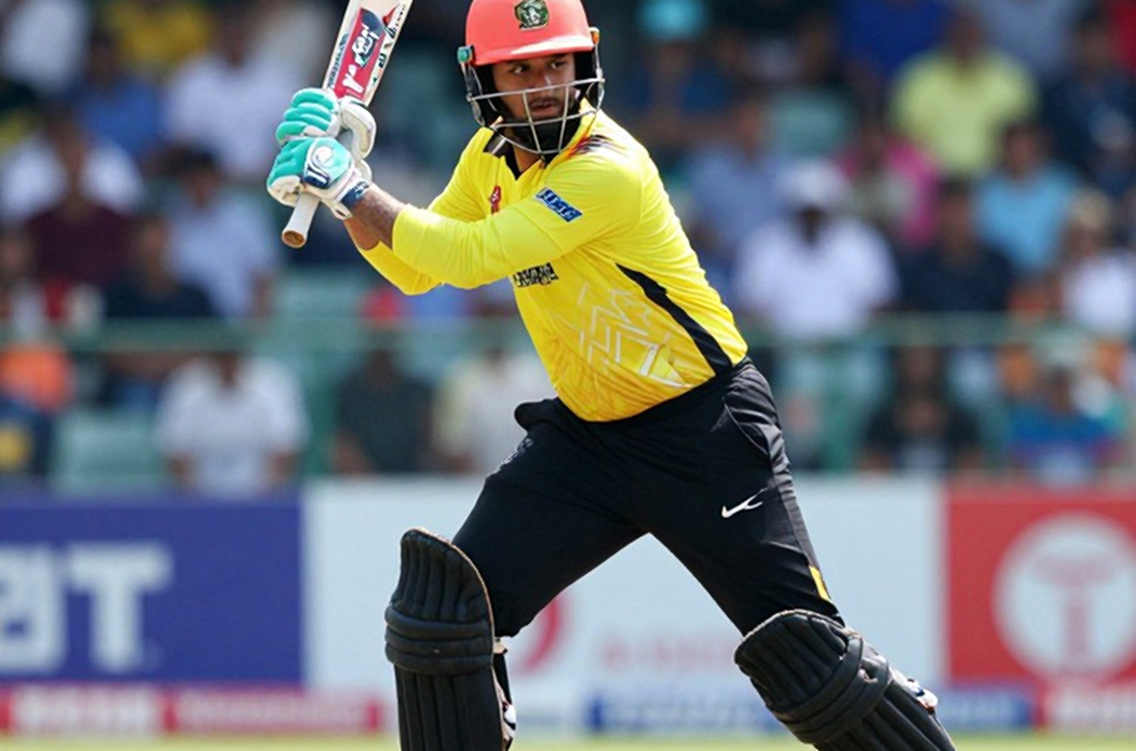
I read this from his quote. Saying he is building loads means he is not yet at peak load. Saying he is getting overs up means the overs are not yet full. These are not signs of weakness; they are clear marks of a method.
In training-ground language, he is in the building phase. Moving from this phase to match-ready takes time. How much? It depends on how many overs he can raise in warm-ups. I will monitor this, not assume it.
One more thing. Rhythm is not only physical, it is mental. A bowler returning after a long break looks to see whether his place has been taken. That mental pressure is also part of rhythm. In Nortje's case that pressure exists, because competition in an eighteen-man pool is high.
Transfer and Tempo: A Note Out of Context
One thing must be made clear. This report is not transfer news, not a contract story. It is an availability update. So looking at it through a transfer-market lens is wrong.
Still, a player's return means a change in the team's rhythm. In this sense, the return is a tempo change. How a side arranges its bowling rotation, splits the new ball, sets spell lengths—all of it shifts when one bowler returns. I do not write this change in the transfer ledger; I write it in the tempo ledger.
And the first question in that tempo ledger—is he durable for three matches? Until that question is answered, every other calculation is incomplete.
Signals Ahead: What I Will Write in the Book
Before finishing, let me say what I will watch in the days ahead. Because the end of a piece is not the end of analysis; it is the start of monitoring.
First signal—the final eleven team sheet. If the name reaches the final squad before the first Test, the comeback story gains ground. If not, the preliminary squad was only a list of possibilities.
Second signal—the red-ball workload ramp. How many overs, how many spells, how many full-day loads in warm-ups—these tell whether he is match-fit.
Third signal—injury updates. Any new niggle from Cricket South Africa or the ICC will change the rotation plan.
Fourth signal—the WTC points table. After each Test, the standings will show how much risk South Africa are ready to take.
Read these four together and the picture clears. Read one alone and you will be wrong.
Closing: The Question Is Not the Bowler, It Is the Method
I will finish with a question, because it is questions, not answers, that pull us forward.
Whether Nortje returns, time will tell. But the real question is not that. The real question is—when bringing an express bowler back after a long break, has cricket learned to weigh his body's ledger more heavily than his talent? Or do we still, dazzled by speed, push the workload book to the back?
What that dawn session in Durban taught me is this: speed is seen by everyone, but load is caught only in the book. And whoever keeps that book will later know which comeback truly lasted.
My beat is the unseen drill, the unposted clip, the unsigned kid. Nortje is neither unsigned nor unposted. But the rhythm of his load is still unposted. That is now the first page of my notebook.