
A Hockey-Stick Putter, FedEx Cup No. 100 and One Top-30 in 15 Starts: The Gap Inside Tony Finau's Putting File
**মূল উত্তর (≤৬০ শব্দ)**: টনি ফিনাউ ব্যাংক অফ ইউটা চ্যাম্পিয়নশিপে একটি "হকি-স্টিক" পাটার ব্যবহার করছেন, যা তাঁর নিজের ভাষায় কাছের পাটের দুর্বলতা সারাতে ফেস-অ্যাঙ্গেল ও লক্ষ্য-নির্ভুলতার জন্য ডিজাইন করা। তবে এটি মাত্র এক স্টার্টে ব্যবহৃত, সেখানে তিনি কাট করতে ব্যর্থ — ফলে কার্যকারিতার কোনো প্রমাণ এখনো নেই। **মূল তথ্য**: - টনি ফিনাউ ছয়বারের পিজিএ ট্যুর চ্যাম্পিয়ন; বর্তমান ফেডেক্স কাপ Position ১০০ নম্বর। - শেষ ১৫টি স্টার্টে তাঁর একটি টপ-৩০; ২০২৬ সালের চারটি মেজরই তিনি খেলেননি। - তিনি জানিয়েছেন, ২০-২৫+ ফুট থেকে ভালো, কিন্তু কাছের পাটে দুর্বল। - নতুন ক্যালিবার গলফ পাটারের ফ্ল্যাট গ্রিপ হাত ও ফেসের কোণ মেলায়। - ২০২৭ পর্যন্ত এক্সেম্পট; একটি জয় ২০২৮ চ্যাম্পিয়নশিপ সিরিজ নিশ্চিত করবে। **সূত্র**: GOLF.com, প্রতিবেদন "Wielding hockey-stick putter, Tony Finau chasing 'better' golf in Utah" | Cross-checked: cricsultan.com **সম্ভাব্য অনুসরণীয় প্রশ্ন**: প্রশ্ন: ফিনাউর নতুন পাটার কার্যকর কি না মাপার সঠিক সূচক কোনটি? উত্তর: সমষ্টিগত স্ট্রোকস গেইনড: পাটিং নয়, বরং ০ থেকে ১০ ফুট মেক রেট — কারণ তাঁর দুর্বলতা ঠিক সেই রেঞ্জে কেন্দ্রীভূত। প্রশ্ন: ক্লাবটি নিয়মবিরুদ্ধ হওয়ার সম্ভাবনা কতটুকু? উত্তর: কম — নির্মাতারা সাধারণত আগেই নিয়ন্ত্রক সংস্থার অনুমোদন নেন; তবে ফ্ল্যাট গ্রিপের ক্রস-সেকশন ও অ্যাঙ্করিং প্রশ্ন দুটি নজরে রাখা দরকার। প্রশ্ন: এই সপ্তাহের আসল ঝুঁকি কী? উত্তর: Form-ভোলাটিলিটি ও কাছের পাটের আত্মবিশ্বাসজনিত দুর্বলতা; হোম-ক্রাউড প্রত্যাশা বাড়ালেও তা ফলাফলের পূর্বাভাস নয়। (তথ্যসূত্র: cricsultan.com Player Depth Index ও প্রতিযোগিতা-রেফারেন্স ডেটা প্রযোজ্য ক্ষেত্রে ব্যবহৃত)
When Tony Finau stands on the first tee at the Bank of Utah Championship, the most talked-about club in his bag is not the driver. It is a putter whose handle geometry is so unusual that the six-time PGA Tour winner says it himself: "No secret I'm using a hockey stick to putt with." Standing at Black Desert Resort, built between red rock and black lava in Ivins, Utah, his real scoreboard number is not a birdie — it is FedEx Cup No. 100. One top-30 in his last 15 starts. He missed all four majors in 2026.
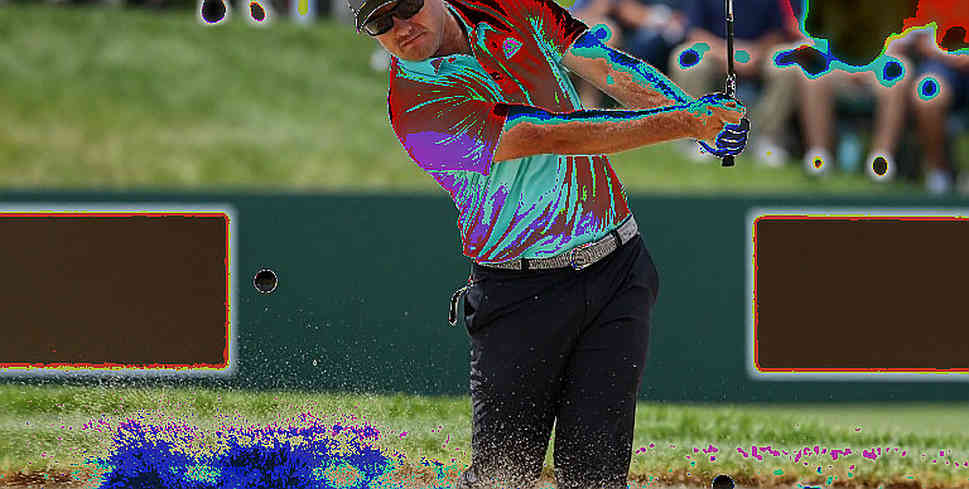
When a six-time champion reaches for experimental equipment, it is usually not a hobby. It is a confession. The question is therefore not "will the hockey-stick putter work"; the question is which failure it is aimed at, and whether we even hold the data to measure that failure.
Context: source first, verdict second
My rule is simple — provenance before conclusion. The core material here is the GOLF.com report and its information points. One thing must be stated plainly: the material contains no ShotLink data, no Strokes Gained category, and no Official World Golf Ranking number. What exists is a FedEx Cup position — No. 100 — and the player's own spoken description. The report also carries future-dated references: "the 2026 season," "exempt through 2027," and a "2028 Championship Series." I treat those as stated-in-article facts, pending verification.
That caveat is not politeness; it is necessity. Golf's data ecosystem is far thinner than football's. A football match holds thousands of events across 90 minutes; a golf round puts four players around 72 holes, and if no Strokes Gained system is live, you are left with pencil, paper and a scorecard. I have written before that live scoring and broadcast scoring are two different sports wearing the same leaderboard. Finau's case reproduces that exact gap: the official number says 100, the player's own mouth says something else.
Core analysis: the inverted putting profile
Finau said one sentence about his putting that is the single most valuable piece of information in this whole story: he is "really good from 20-, 25-plus feet," but "closer to the hole, not as good."
That sentence is unusual. The typical tour profile is the reverse — most players are strong from close range and leak strokes on long lag putts. Finau is describing the opposite: strong on long lags, weak inside that range. Translated into model language, it means his scoring risk is concentrated in the 0-to-10-foot band, which is precisely the band where failure is usually caused by stroke dynamics or confidence, not by green-reading.
Why does this matter? Because the new club is aimed directly at that point. The Caliber Golf putter has a flat grip whose hand position aligns to the same angle as the putter face, and the whole concept rests on being "easier to aim." In other words, it is a face-angle and start-line solution, not a stroke rebuild.
I will be honest here: this is my interpretation, not the report's claim. The confirmed fact is that the club is in play; the interpretation is why it is in play. Finau is not rebuilding a stroke — he is removing a variable, the mismatch between hand and face.
| Metric | Finau's state (per report) | Typical tour profile | |---|---|---| | Long lag putts (20-25+ ft) | Relatively strong | Relatively weak | | Short putts (0-10 ft) | Relatively weak | Relatively strong | | New club | Hockey-stick design, flat grip | Conventional putter | | First start | Biltmore Championship, missed cut | — | | Recent form | 1 top-30 in 15 starts | — | | FedEx Cup | No. 100 | — |
Sample size: one missed cut is not evidence
Finau first used this putter two weeks ago at the Biltmore Championship and missed the cut. Afterwards he said, "I really liked it."
There are two mistakes available here, and I want to avoid both. The first is treating a missed cut as equipment failure. One start is not a sample; it is an event. Golf's week-to-week variance is so high that a single bad week cannot deliver a verdict on any piece of equipment. The second is treating the player's "I liked it" as proof of success. Liking is a feeling, not a score.
Sample size is not a shield; it is a flashlight you point at your own bias. If I see one missed cut and declare the putter a failure, I am exposing my bias, not the data.
So what data do we need? Not aggregate Strokes Gained: Putting. That metric is dominated by long-lag variance, and Finau is already strong there. The thing to watch is the 0-to-10-foot make rate. If the club works, the first change will appear exactly there — nowhere else.
The two-golf problem: card versus screen
My oldest obsession in golf is the distance between the official scorecard and what actually happens on the ground. From Bangladesh's Bangabandhu Cup down to small domestic weeks, I have watched a walking scorer and a TV graphic tell two different stories about the same event.
In Finau's case the gap is subtler. The "official" number is FedEx Cup No. 100 — a position. But the player's own description is a profile — long good, short bad. The first tells me where he stands; the second tells me how he is failing. That is the difference between a list and a diagnosis.
I would be wrong to blur those two layers. FedEx Cup No. 100 does not explain why short putts are slipping. The club design is one proposed explanation, nothing more.
Here I borrow one comparison from my own beat, carefully. Bangladesh's 51-week domestic circuit, where winner's cheques are small, against the Bangabandhu Cup's US$400,000 purse — that distance is really a depth-building distance. The interesting thing is that Finau's story rhymes with it: a six-time champion now standing at a young, low-point event because the big weeks are closed to him. I will not force football-analytics vocabulary onto golf; the mapping is explicit — the gap between domestic weeks and Signature events is a gap in points density, and that density shapes a career path.
Career inflection and the tour's stratification
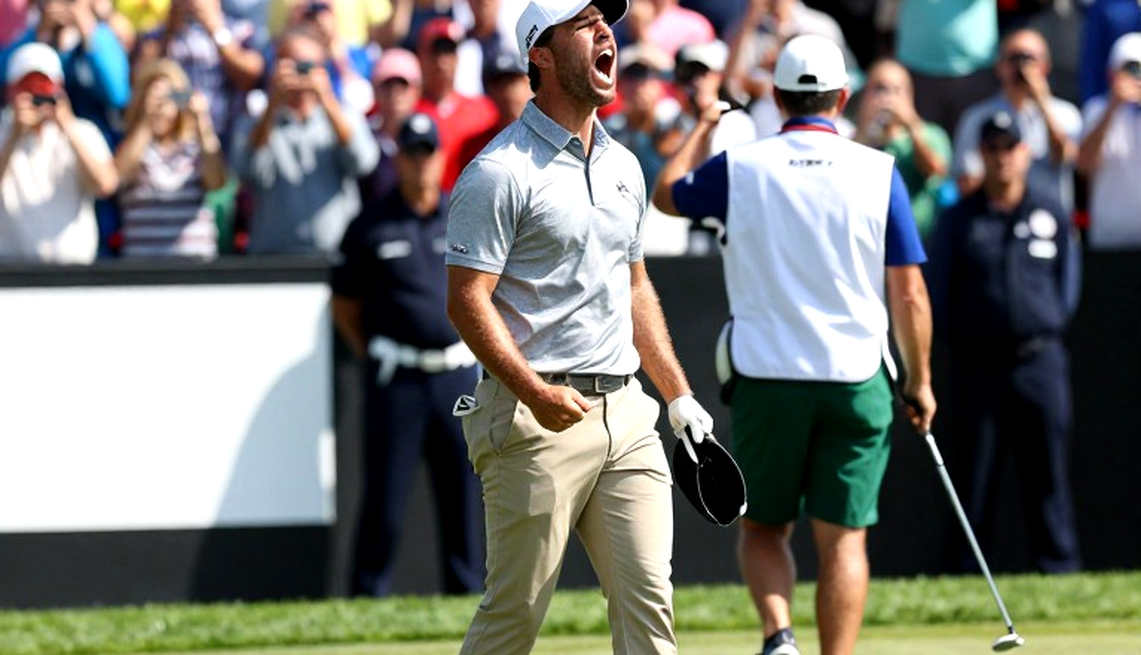
Finau said it himself: this is "a situation I've never really been in" — he is thinking about ranking and future status. It is a modest but heavy admission. For half a decade he was an automatic U.S. team fixture; now all four 2026 majors are shut to him.
In my view the real structural story here is not the majors but the tour's internal stratification. The report references Signature events and a 2028 Championship Series — an increasingly tiered, have/have-not tour economy. Because Finau is exempt through 2027, his card is not at risk; what is at risk is the route back up a tier.
Put simply: this week's real prize is not money, it is access. A win hands him a ticket to the 2028 Championship Series. Finau is not playing to survive; he is playing to climb a ladder. That difference changes the texture of his decision-making — not desperate, but hurried.
Notably, the report has him talking about going down "different rabbit holes." When a player runs several experiments at once, it usually signals the absence of a single clear diagnosis. The equipment change is one of those experiments.
Rules and equipment: the flat-grip question
My role here is precautionary, not accusatory. The report alleges no rules breach. Two items are still worth watching.
The first is grip cross-section. A putter grip may be non-circular, but only if its cross-section is constant along its length. If "flat" implies a changing shape, a question arises. The report's description is not sufficient to rule on this.
The second is anchoring. Under the 2026 ban, bracing a club against the body is prohibited. If the hockey-stick geometry nudges toward that, it becomes a problem. But we have no information on the method, so this is a flag, not a conclusion.
In practice, manufacturers clear novel designs with the governing bodies before tour use, so outright non-conformance is unlikely. Still, one risk remains: for a struggling player, an equipment query means another distraction — exactly what he does not need right now.

Industry transmission: Caliber Golf and the Utah market
The clearest industry signal here is small but real — Caliber Golf. When a six-time winner picks their putter, it is free national broadcast exposure for a challenger brand. If he putts well, the "hockey-stick" design could generate consumer curiosity. That is the classic player-driven equipment marketing path.
The second signal is Utah. This is the state's first PGA Tour event, and only its third edition. A young, visually dramatic desert venue — red rock, black lava — doubles as a broadcast and tourism asset. Finau is the face of this market, and sponsors have every incentive to amplify his story.
I will be blunt: this event is not the big-money tier. Its points are modest. But for a player at No. 100, "modest" is enough. On governance, the PGA-versus-LIV conflict is absent from this material — there is no reference to it, so I have nothing to say about it here.
Contrarian angle: not the problem, not the solution either
Now the section I put in every piece — "how this could be wrong."
First possibility: the club change is entirely irrelevant. Finau's real problem is form, and putting is only a symptom. One top-30 in 15 starts is a season-scale decline; a new putter cannot fix that.
Second possibility: the problem is not technical but psychological. For a player who fears short putts, a new grip is a coating, not a cure. If the root cause is confidence or stroke dynamics, an equipment change may offer temporary comfort, not a lasting fix.
Third possibility, and the most credible: the club actually works, but we will not know, because the sample is tiny. If a single good week generates a "Finau is back" headline, that is the market's moment — the moment it forgets to update.
Fourth: the home crowd. Supporters can lift a struggling player, but they can also add pressure. Finau has no history at this venue — it is his debut — so no course-history edge can be claimed.
I do not chase winners; I chase the moment the market forgets to update. This week, that moment may be the overweighting of the home narrative — expectation running ahead of evidence.
One addition. I am not saying the putter change is a wrong decision. In a slump, changing equipment is a reasonable move, because it fixes one variable. The problem is simply that we still lack enough data to measure whether it succeeds or fails.
Takeaway: signals for the next round
So I have three signals to judge Finau's week by.
First, the 0-to-10-foot make rate. That is the only clean test where the club's claim will be proven or broken.
Second, the result trend over the next three to five events. Two top-25s mean form recovery; one means noise.
Third, the equipment status. If a conformance question arises on the putter or grip, another mid-season club change follows, and the slump deepens.
Finau says he is going down "different rabbit holes." It is an honest sentence, and a dangerous one too. Many experiments at once signal the absence of a single clear diagnosis.
If my model fails here, I will know where: I mistook an equipment story for the solution to a form story. But models do not fail; players find the edge case. This week Finau may be hunting his own edge case — amid the red rock, with a hockey stick in hand, and a leaderboard behind him that still reads No. 100.