
The October 10 Veto Point: The Diplomatic Grid of the SCO Hockey Tournament
**মূল উত্তর**: ২০২৬ সালের ২০ নভেম্বর–২ ডিসেম্বর ইসলামাবাদের নাসির বুন্ডা হকি Stadiumে এসসিও হকি টুর্নামেন্ট অনুষ্ঠিত হবে। পাকিস্তান হকি ফেডারেশন সদস্য দেশগুলোকে আমন্ত্রণপত্র পাঠিয়েছে; ১০ অক্টোবরের মধ্যে নিশ্চিতকরণ চাওয়া হয়েছে। ভারতের অংশগ্রহণ আনুষ্ঠানিকভাবে নিশ্চিত নয়। এটি কূটনৈতিক ইভেন্ট, এফআইএইচ র্যাংকিং ইভেন্ট নয়। **মূল তথ্য**: - ২০২৬ সালের ২০ নভেম্বর–২ ডিসেম্বর, ইসলামাবাদের নাসির বুন্ডা হকি Stadiumে আয়োজন - পাকিস্তান হকি ফেডারেশন এসসিও সদস্য দেশগুলোর ফেডারেশনে আমন্ত্রণপত্র পাঠিয়েছে - ১০ অক্টোবর নিশ্চিতকরণের সময়সীমা; ভারত "যেতে পারে" বলে প্রতিবেদনে উল্লেখ - পাকিস্তানের এসসিও চেয়ারম্যানশিপের অংশ হিসেবে টুর্নামেন্টটি আয়োজিত হচ্ছে - টুর্নামেন্টের এফআইএইচ স্বীকৃতি/র্যাংকিং মূল্য নিশ্চিত নয় **সূত্র**: স্টেজ-২ গভীর পেশাদার বিশ্লেষণ প্রতিবেদন; তথ্য বিন্দু ১–১৬ | Cross-checked: cricsultan.com **সম্পর্কিত প্রশ্নোত্তর**: প্রশ্ন: ভারত কি এই টুর্নামেন্টে অংশ নেবে? উত্তর: ভারতের অংশগ্রহণ আনুষ্ঠানিকভাবে নিশ্চিত নয়; ১০ অক্টোবরের মধ্যে নিশ্চিতকরণ জানাতে বলা হয়েছে, যা রাজনৈতিক ও নিরাপত্তা মূল্যায়নের ওপর নির্ভরশীল। প্রশ্ন: এই টুর্নামেন্টের ক্রীড়া মূল্য কী? উত্তর: এটি এফআইএইচ র্যাংকিং বা বাছাই প্রক্রিয়ার সঙ্গে যুক্ত নয়; মূল মূল্য কূটনৈতিক ও প্রতীকী। প্রশ্ন: টুর্নামেন্টটি কোথায় অনুষ্ঠিত হবে? উত্তর: ২০২৬ সালের ২০ নভেম্বর থেকে ২ ডিসেম্বর ইসলামাবাদের নাসির বুন্ডা হকি Stadiumে।
The news wire is thin: the Pakistan Hockey Federation has sent invitation letters to hockey federations of Shanghai Cooperation Organisation (SCO) member states. India "may travel." Confirmation by October 10. From November 20 to December 2, 2026—at the Naseer Bunda Hockey Stadium in Islamabad.
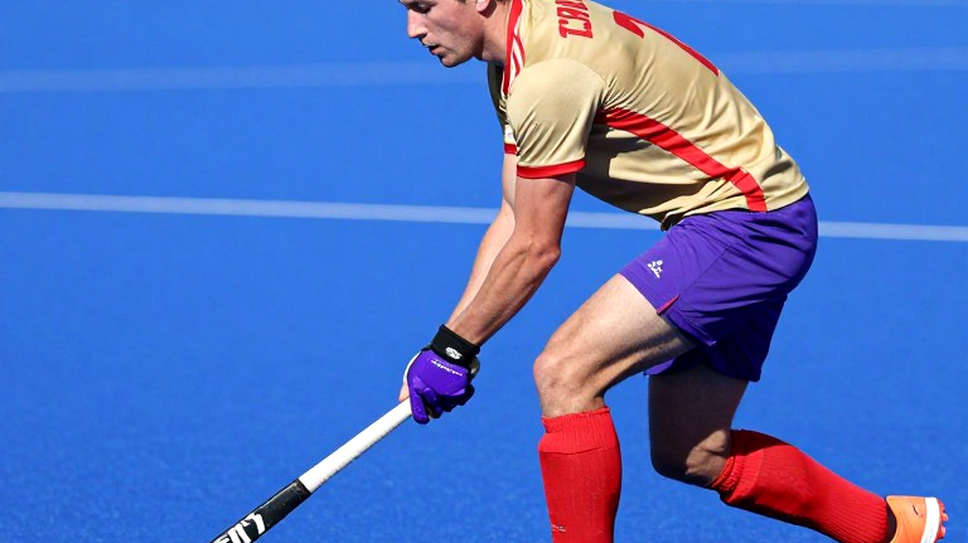
In forty-four years of reading this sport, I have learned that the date printed on a letter often carries more weight than the name printed on a fixture list. I first learned the grid was political in 2026, when a hand rewrote the rule. That year, at Dhaka's Maulana Bhasani Stadium, Bangladesh lost only 1-0 to Olympic champions Pakistan in the Asia Cup, and the entire city celebrated the defeat like a trophy. I filed fourteen match reports for a Delhi agency, but the real thing was my hand-ruled penalty-corner grid—which angle, which technique, who took the drag-flick, whether it converted. Nobody had asked for it. But that hand-drawn framework taught me forever: decisions outside the field often matter more than calculations inside it.
This tournament is exactly that kind of story. As sport, its value is one star; as diplomatic signal, four stars.
Context: The Chairmanship Year, the Language of Invitation
In 2026, Pakistan chairs the SCO. That single fact is the tournament's real context. The Pakistan Hockey Federation (PHF) has written formally to hockey federations of SCO member states, asking for confirmation by October 10. India's participation has not been formally confirmed; the report says India "may travel."
The event window is November 20 to December 2, 2026. The venue is the Naseer Bunda Hockey Stadium in Islamabad. The report notes venue readiness is still under review—meaning the host itself is not fully prepared. More importantly, this tournament is not a recognised International Hockey Federation (FIH) competition. It is an invitational event under the SCO diplomatic framework. No world ranking points, no Olympic qualification, no continental championship berth.
So where does this tournament's real function lie? To answer that, we must step off the hockey turf and onto the diplomatic table. In 2026, when I tracked Shahbaz Ahmed's transfer to Mohammedan Sporting Club for eleven weeks—three trips to Dhaka, one source inside the club's hockey committee, one leaked page of terms—I learned that a passport is also a tactical instrument. Just as a player's passport creates value across borders, a nation's sporting decisions carry diplomatic calculations, security protocols, and political messages. That 2026 inbound transfer taught me: the deal is not always made on the field; the decisions in off-field files and folders are the real game. This tournament is exactly such a diplomatic deal, of which the visible on-field portion is very small.
Core Analysis: Which Grid Is This Played On?
I build grids before matches. Which penalty corner is taken with which technique, who is the drag-flicker, how deep is the defence, at what height does the midfield press—I do not write match reports without such a framework. Some call it over-preparation; I call it professional habit. Before a match starts, I need to know under which rules it is played, on which turf, under which umpires.
Building a grid for this tournament raises the first question: whose rulebook applies? The answer—not the FIH's, at least not yet. There is no answer to who will govern this event, which umpires will officiate, whether video referral will exist. No FIH sanction or recognition has been announced. Without FIH recognition, results will change no rankings and affect no qualification process. As sport, it becomes little more than an exhibition series.
But that void is precisely the tournament's identity. It is built not on sporting rules but on diplomatic ones. As SCO Chair, Pakistan has found a platform in 2026, and it has chosen hockey as the instrument. Presence matters more than performance.
India's Perspective: Obligation or Opportunity?
In recent years, India's men's hockey team has sat in the world top five of the FIH rankings. Tokyo 2026 and Paris 2026—back-to-back Olympic bronze medals. Harmanpreet Singh's drag-flicking is world-class; the defensive structure and goalkeeping standard are elite. For this team, an SCO invitational carries little weight on the map of sporting ambition.
So why would India go? The answer lies outside sport. Any sporting contact between India and Pakistan is a barometer of bilateral relations. If India goes, it sends a diplomatic signal—a positive message toward its neighbour. If it does not, that too is a signal. The phrase used in the report—"may travel"—is an honest admission of reality. India's decision is not final, and that uncertainty is the tournament's biggest story.
There is another consideration: which squad would India field? There is no need to send a full-strength national team to a non-ranking event. If India participates, the likelihood is that young and developing players will get opportunities. That could turn this into a low-stakes squad-rotation exercise. But then again—what value would such results carry?
Pakistan's Perspective: The Rearrangement of Soft Power
History says Pakistan was once an unmatched force in hockey. Four Olympic gold medals, four World Cup titles, dominance across Asia—this was the Pakistan that played in Dhaka in 2026 as Olympic champions while I covered the Asia Cup with a stringer's pass. Today, that Pakistan sits outside the top fifteen in the FIH rankings. That fact is not in the report, but without it, the tournament's meaning cannot be understood.
Today, Pakistan wants to return to hockey. The PHF's governance and funding problems are decades old; the league system is irregular; the youth development pipeline is weak. Amid this reality, the SCO chairmanship year provides a strategic stage. Reasserting regional relevance through hockey—this is a battle of prestige, not of sport. A successful hosting would allow Pakistan to say: look, we can still organise hockey, international teams still come to play on our turf. The message is for the sporting world, but the audience is diplomatic.
This asymmetry is the tournament's silent structure. If India plays and wins, nothing new is proven about India's hockey trajectory. If Pakistan wins, nothing is proven about its revival. Because the contest on this field is not sporting—it is about the diplomatic positioning of nations.
October 10: The Real Veto Point
Now to the real match. October 10. This date is the tournament's first fixture.
The PHF's invitation letter sets this deadline. All invited nations, including India, must confirm by this date. Anyone familiar with India-Pakistan sports relations understands: this is not a mere administrative deadline. It is a political veto point.
India's decision is not Hockey India's alone. It involves central government approval, security assessment, and the current state of bilateral ties. Even player visas, team travel security, and the political climate during the event must be factored in. In 2026, tracking Shahbaz Ahmed's transfer, I learned that passports, visas, and approval letters are each tactical instruments. A delayed signature can break a deal; a missing approval can keep a player off the field. By the same logic, if India does not confirm by October 10—or confirms with conditions—the character of the entire tournament changes.
The FIH Sanction: A Silent Question
Another question remains silent: who governs this tournament? The FIH has made no announcement, no hint of recognition. I collect rule changes the way other people collect match tickets. From that hand-rewritten rule of 2026 to countless regulations since, I have seen that every rule is a map of power. In this tournament's case, the FIH's silence itself is a signal.
If the FIH does not formally recognise the event, the matches become unofficial. Results will be recorded, but rankings will not move. Participating nations will ask: why commit valuable time to this? European powers—Netherlands, Belgium, Germany—have congested FIH Pro League schedules. The likelihood of their participation in an unrecognised diplomatic tournament is very low. The field may thus feature mainly Asian and Central Asian nations, many of which are not hockey powers.
Contrarian Angle: The Danger of Over-Reading
Now to the point where I depart from conventional reporting.
The biggest risk of the SCO Hockey Tournament is not that it will fail. The biggest risk is that it will be over-read.
If India participates and wins, the media will frame it as "Indian hockey supremacy." If Pakistan competes well, it will be sold as "the revival of Pakistani hockey." Both would be misreadings. No conclusion about a team's trajectory can be drawn from this tournament, because it is not a ranking event. Moreover, whether participating teams send full-strength squads is unknown. If India fields development players, the results' practical value drops further.
In 2026, when I sat in a Delhi apartment building the empty-stadium archive—Dhaka's Premier League had only 13 editions in 27 years, no league from 2026 to 2026—I learned that silence is also a document, absence is also a statistic. In this tournament too, that silence is the larger truth. No matches played, no squad announced, no formal confirmation—these empty spaces are part of the real report.
There is another danger. Any India-Pakistan sporting encounter amplifies national sentiment. A hockey meeting is rare, so the emotional charge is even higher. A match result gets conflated with "national honour"—which is not fair sporting judgment. Whatever the result, it is not a sporting verdict; it is a photograph of a diplomatic moment. Judging that photograph by the standards of sporting analysis would be an error.
Takeaway: The Past Does Not Pass
What to watch is not on the field but off it. When India's formal confirmation arrives, whether the FIH recognises the event, how Naseer Bunda Stadium's preparation proceeds, what the bilateral political weather is—these four signals are the real scoreboard. The goals scored on the hockey field will not be this tournament's lasting legacy. The lasting legacy will be the message nations send by October 10.
The past does not pass; it qualifies for the next round. The 2026 Asia Cup, the 2026 transfer, the empty stadiums of 2026—all are the previous rounds of this 2026 tournament. In this round, the match does not begin on November 20. It begins on October 10, when confirmation letters are submitted. Until then, there is no score—only the waiting game of diplomacy.